FuturOps: Palantir user conference in Dallas
A proud sponsor and hackathon competitor
Published Oct 27, 2026
We spent two days in Dallas at FuturOps, speaking to Palantir partners and competing in the data wranglers hackathon.
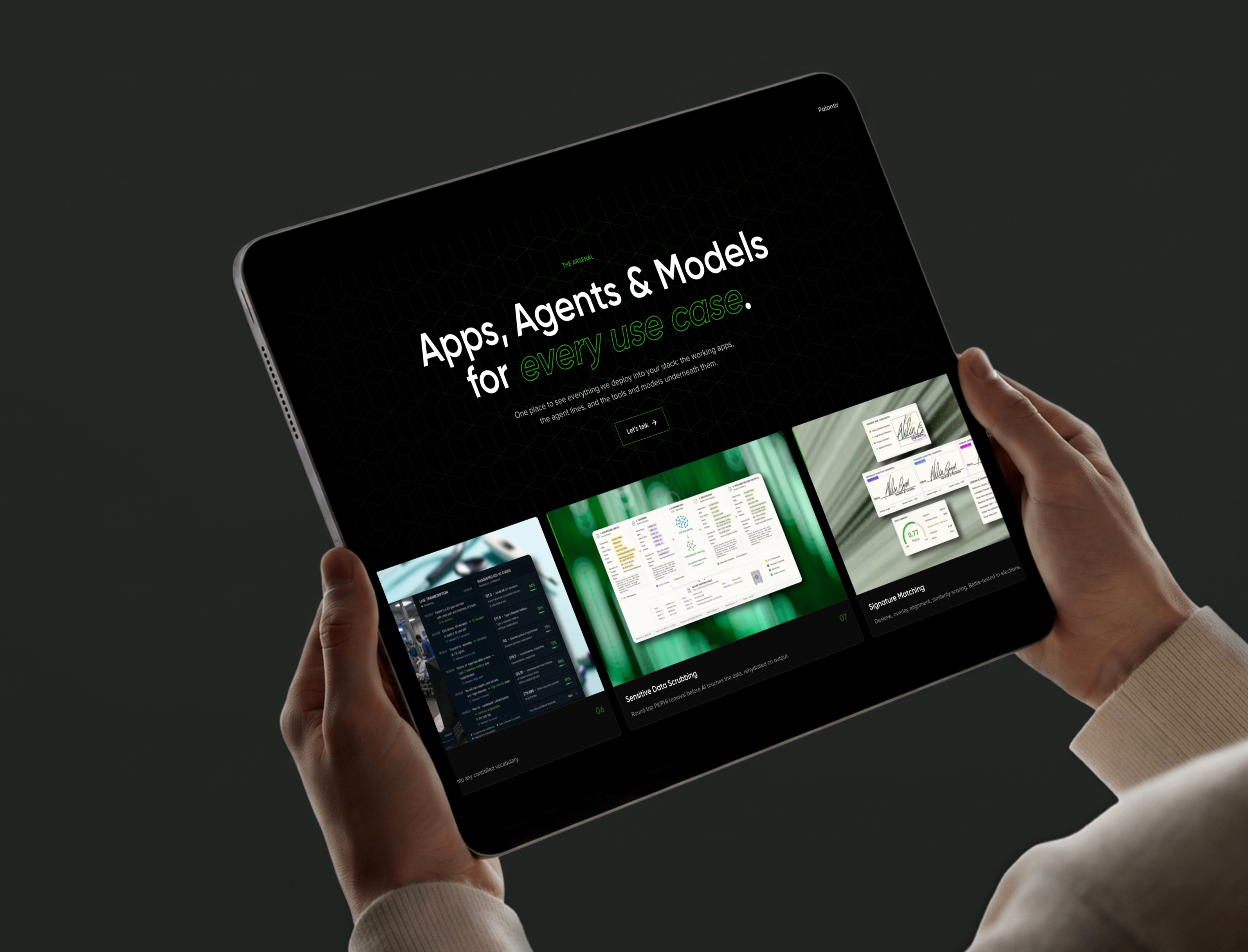
At the booth, our engineers walked people through MEDKONG, our modular AI kit for healthcare revenue cycle management, and PetitionVerify, our petition verification platform, along with a few other builds.
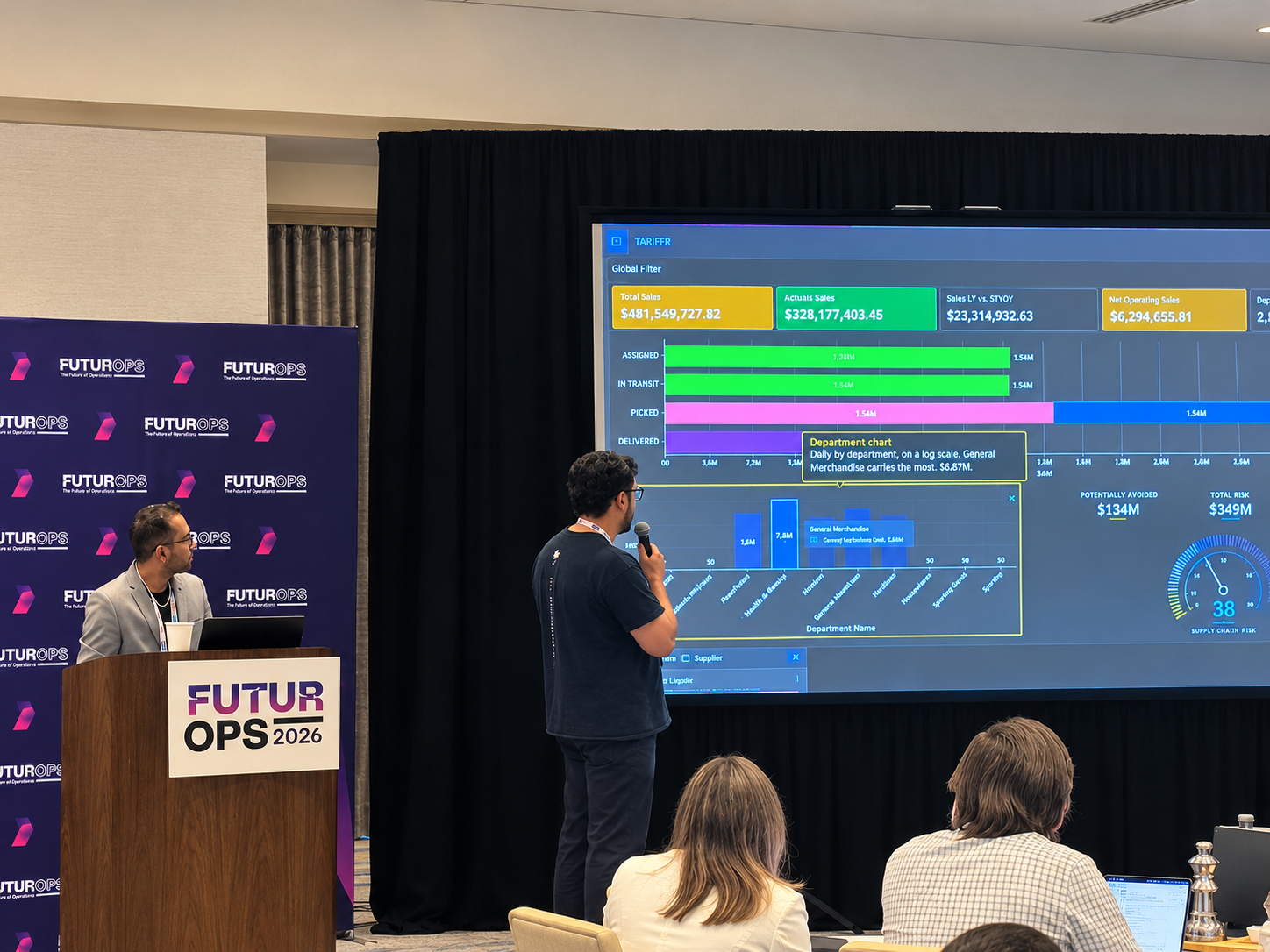
The hackathon gave every team the same challenge: tariffs. Our team built TariffIQ in Foundry, with procurement, supplier and tariff data connected through the Ontology.
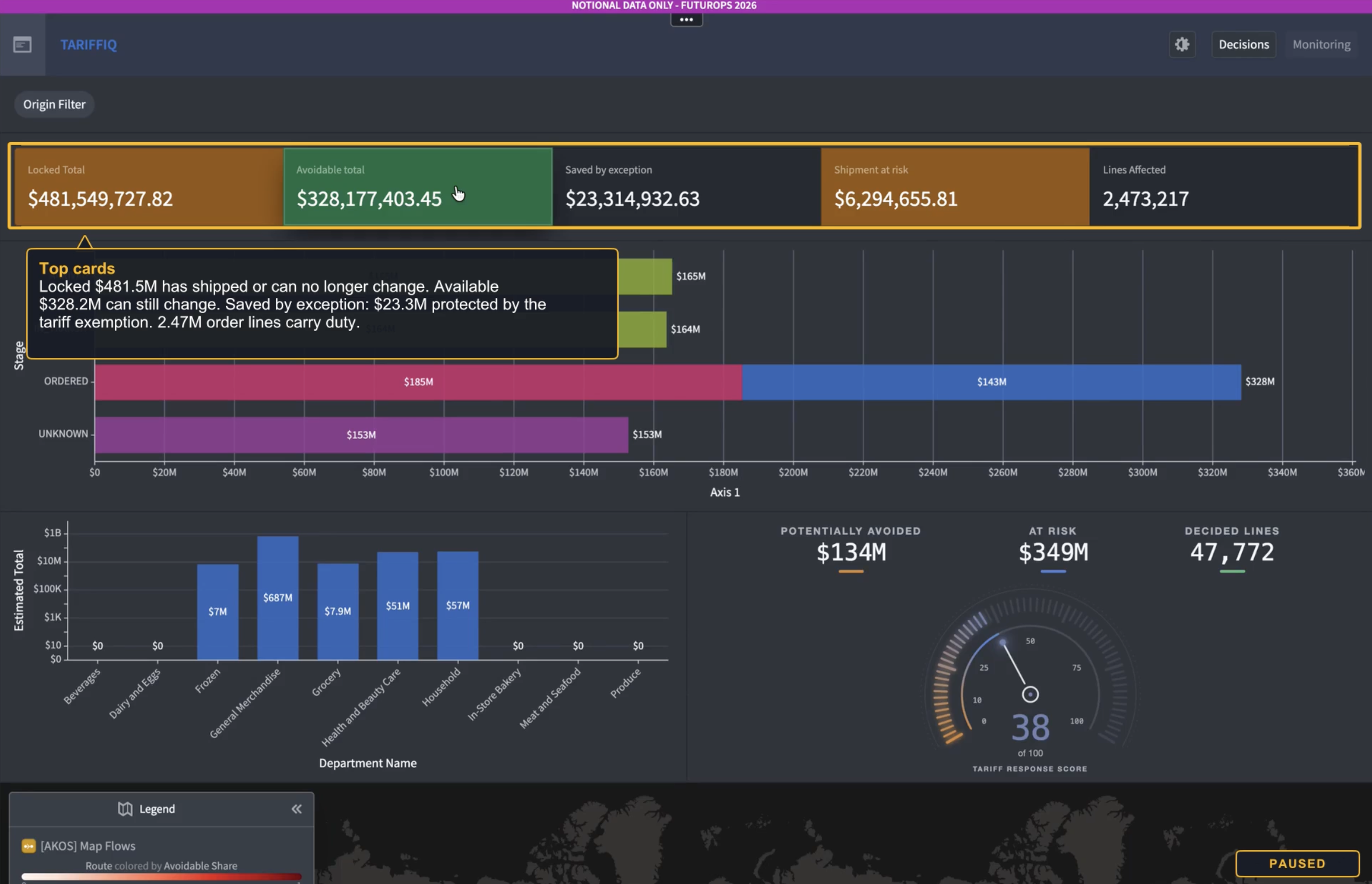
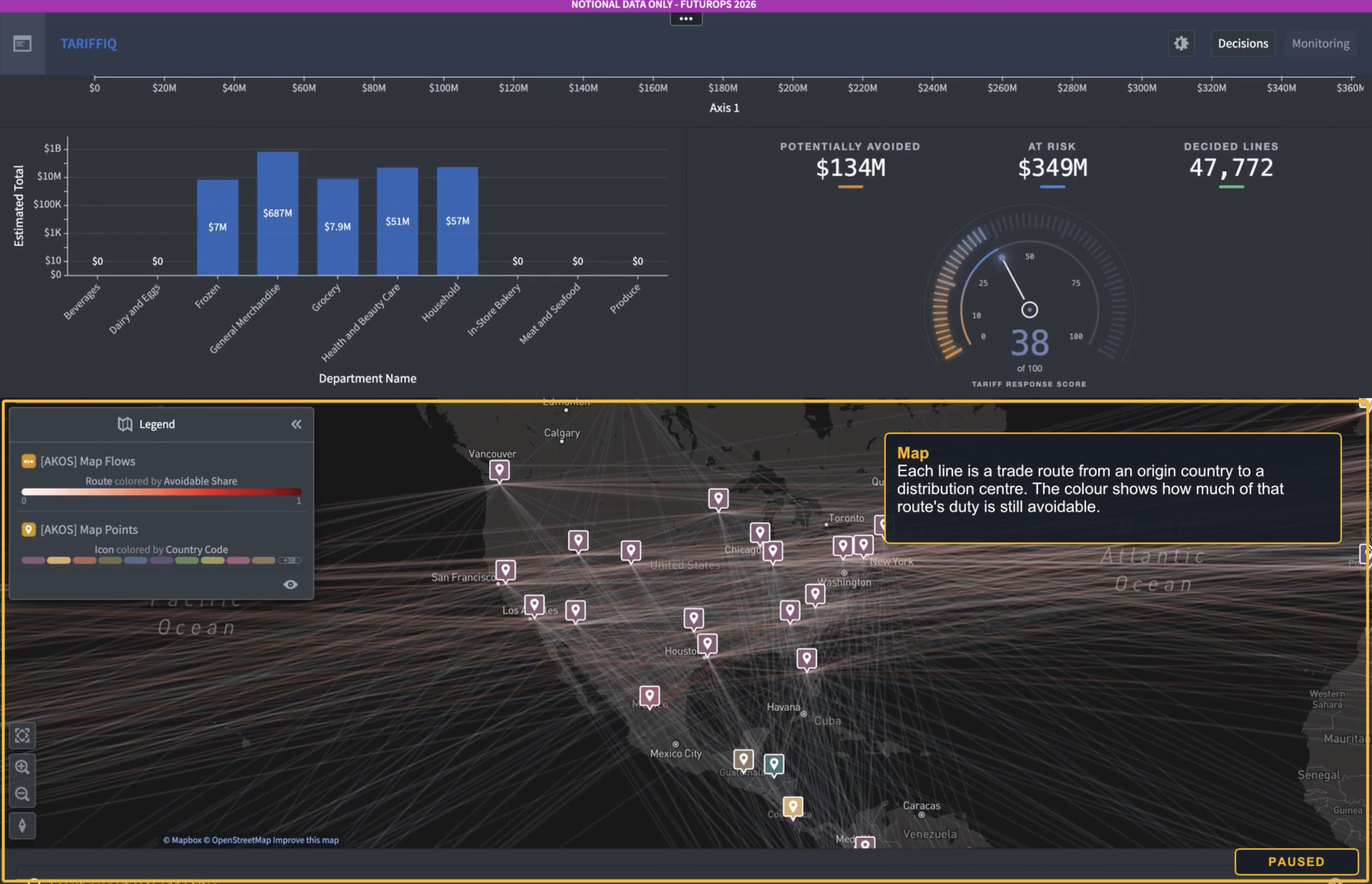
The first thing TariffIQ does is separate what can still change from what can’t. Some duty is already locked because the goods have shipped or the order can no longer be touched. Some is protected by exemptions. What’s left is the avoidable portion. From there, the app breaks that exposure down by order stage and by department, and maps every trade route from origin country to distribution centre, colored by how much of that route’s duty is still avoidable.
The second thing it does is help people act. A manager can make a decision once at the level that makes sense, whether that is an entire supplier, a single item from one supplier, a purchase order or an individual line. For each supplier, TariffIQ shows the open duty, what switching to an alternative supplier would save, and whether USMCA can be claimed. It is also honest about the limits. In our dataset, most of the avoidable duty had no alternative supplier in the capacity data at all, which is exactly the kind of thing a team needs to know before assuming they can source their way out.
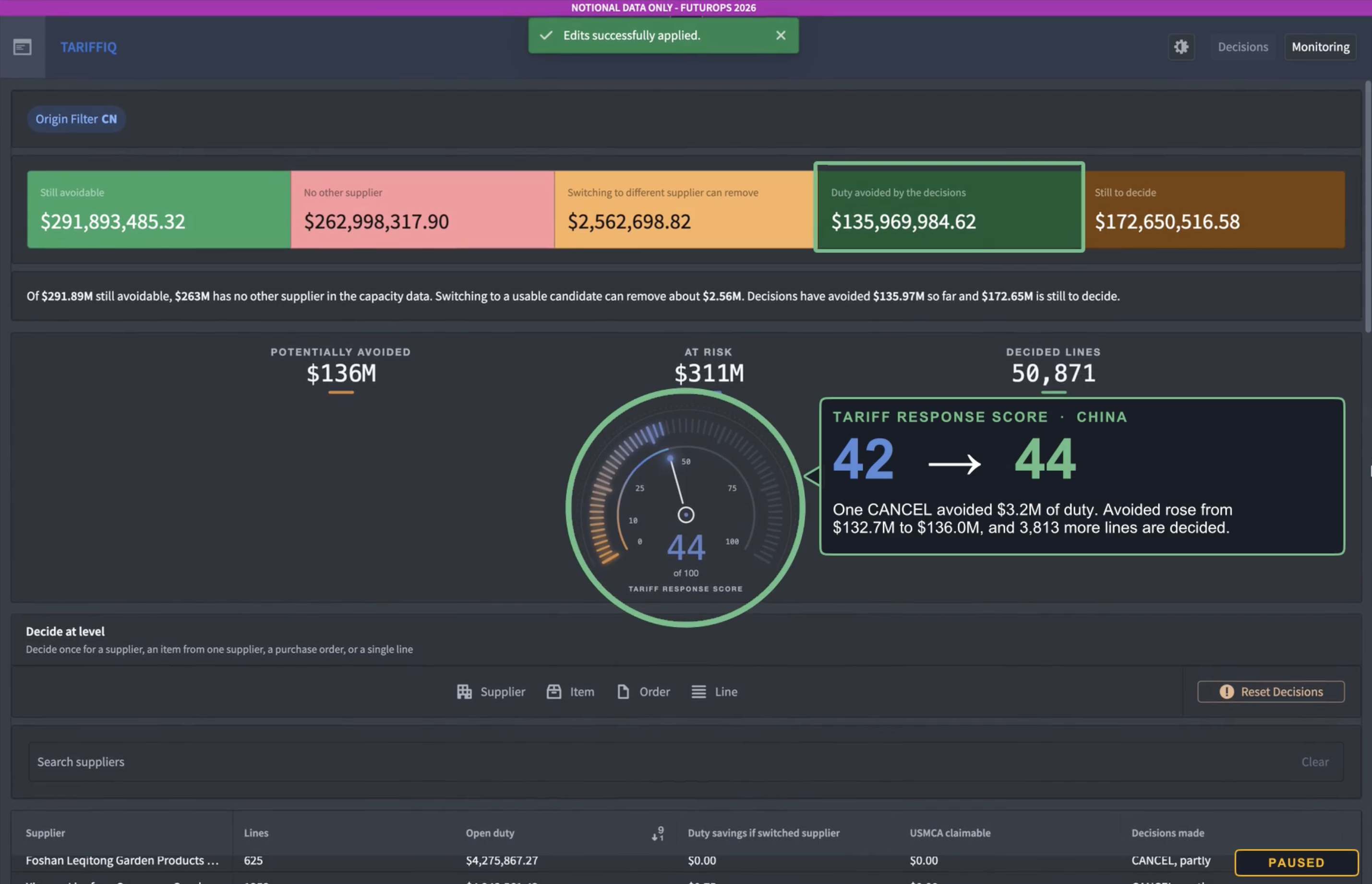
Tying it together is the Tariff Response Score. It is calculated as duty avoided minus the cost of switching, divided by the total at risk, and it updates live the moment a decision is saved. In the demo, a single cancel decision moved the score from 42 to 44 and pushed thousands more order lines into the decided column. It gives a team one number to rally around and a clear sense of whether their decisions are actually moving the needle.
What stayed with us was seeing how other teams approached the same problem. Several of us independently landed on similar ideas, like response desks, exposure monitoring and supplier alternatives. The implementations, though, went in very different directions. Some teams built multi-agent systems that reasoned through incoming shipments and tariff changes. One team used agents to check whether the underlying data was accurate before acting on it at all, which is a step a lot of real deployments skip. Others focused on structured operational applications with custom interfaces and live views of shipments around the world. Each approach had real strengths.
The bigger takeaway for our team was that building the dashboard or wiring up the agent is rarely the hard part. The hard part is understanding the business relationships underneath, figuring out which constraints actually matter, and designing something people can use when they are responding to a real problem under pressure. Watching teams go from scattered data to working operational tools in a matter of hours was a good reminder of how much the Ontology makes possible when that groundwork is done well.
Thank you to everyone who stopped by the booth, and to the teams on the hackathon floor for the ideas we are bringing back with us. All screenshots use notional data built for the event.