Document Intelligence
Handwriting, signatures, messy tables, legacy scans. We turn the documents nobody wants to type into structured, auditable data.
Handwriting, signatures, messy tables, and scans from a machine that should have been retired a decade ago. These are the documents nobody wants to type, so they sit in a room while somebody decides whose summer intern gets the job.
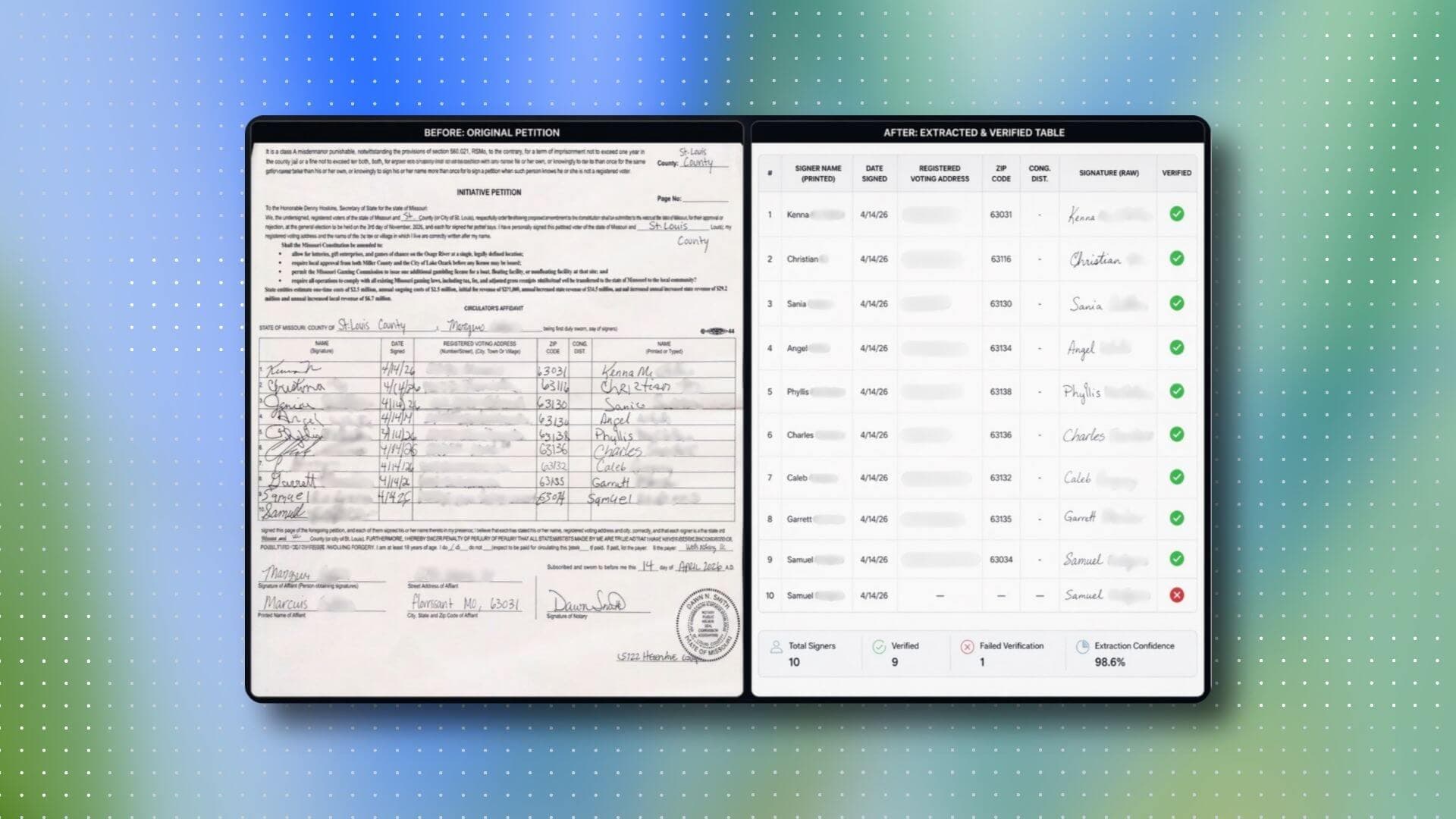
We've done this at volume in elections, healthcare, and banking. Signature verification on a ballot initiative is a good test of a system, because the output has to survive a legal challenge, not just an accuracy chart.
So extraction is only half of it. The other half is confidence scoring, integrity checks, batch-level review, and an audit trail that shows exactly how a given field got its value.
Battle-tested in elections, healthcare, and banking. Extraction with confidence scores, integrity checks, and human review built in, so the output holds up when someone challenges it.
Handwriting and form extraction
Handwritten rows, filled forms, and legacy scans turned into structured fields, with a confidence score attached to each one instead of a single number for the page.
Table structure recovery
Tables that span pages, merged cells, and columns that drift. We recover the structure, not just the text, so the output is actually queryable.
Signature verification
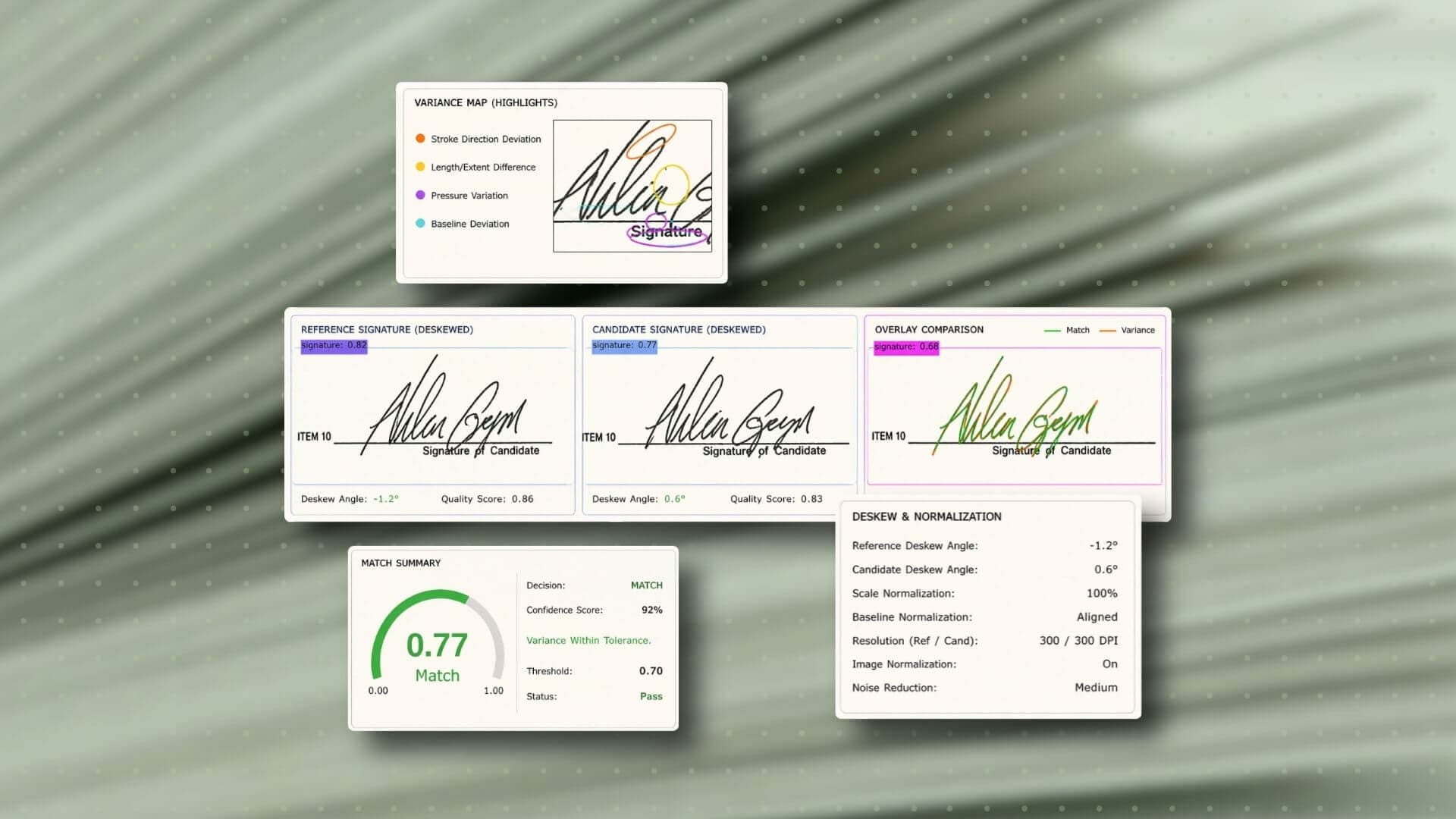
Match against a reference set with a score, a threshold, and a documented method. Built for the moment someone disputes the result.
Integrity and fraud checks
Duplicate detection, sequence checks, and anomaly flags across a batch, because the interesting problems are usually visible at batch level and invisible per page.
Sensitive data handling
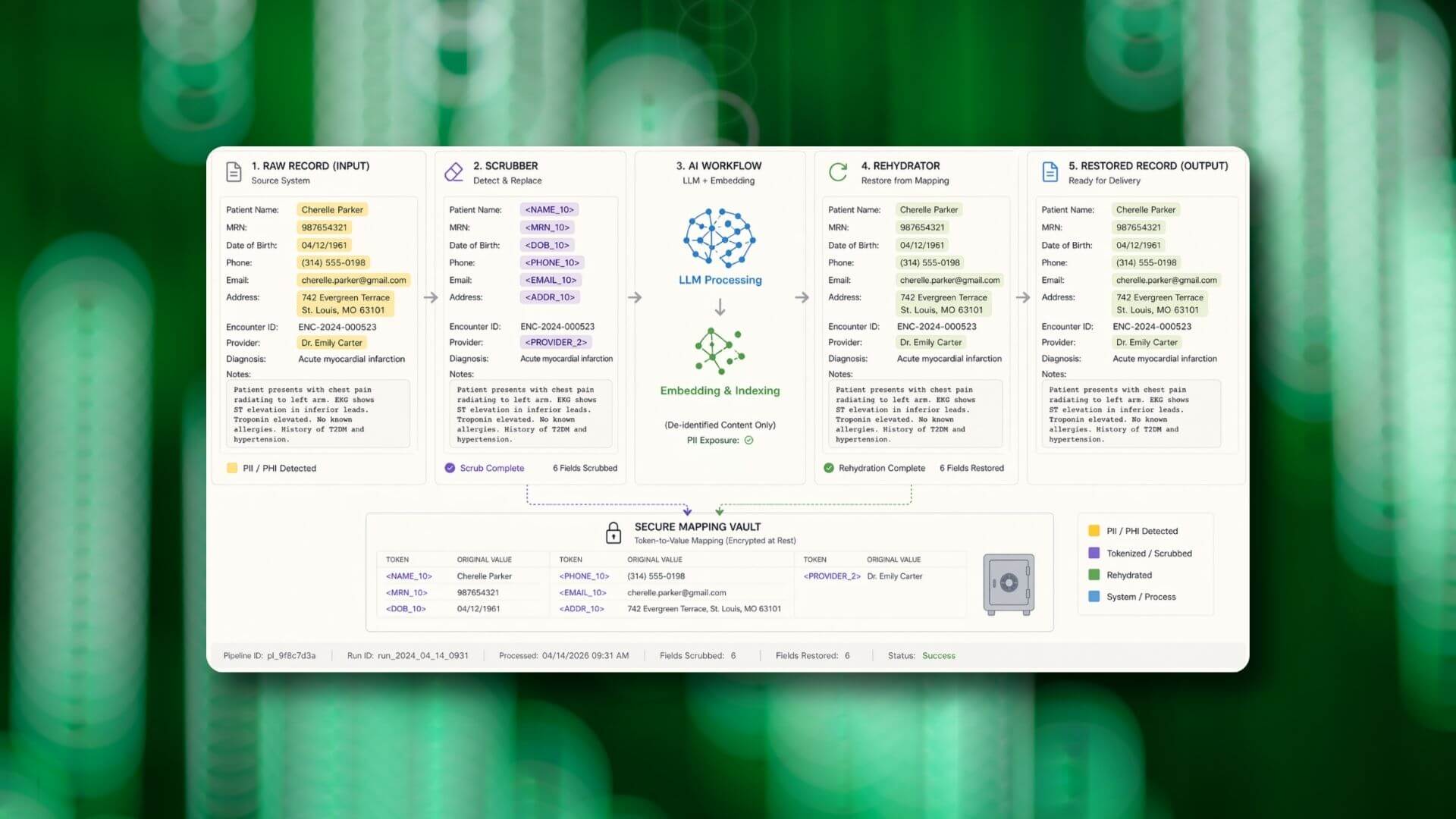
Scrub identifiers before processing and rehydrate on the other side, so the sensitive fields never sit where they shouldn't.
Human review that scales
Reviewers see only what's below threshold, with the crop, the context, and the decision in one screen. That's the difference between reviewing everything and reviewing what matters.
Narrow first. Checkpoint often. Nothing you can't walk away from.
Discovery
A short sprint with your operators. We map the use case, the objects, and the data you actually have, not the data the diagram says you have.
First build
We pick the thinnest slice a real person can use on a real day, and ship that. Production-ready on the first release, not a prototype we promise to harden later.
Every two weeks
A checkpoint and a decision. You see working software, you tell us what is wrong, we adjust. You are never locked into the next phase.
Handover
Documentation, runbooks, and your engineers in the repo while we build. If we disappear, the thing keeps running.
What you're handed
Structured, queryable output with per-field confidence scores
Batch-level integrity and anomaly reporting
A review interface for everything below threshold
An audit trail from the extracted value back to the pixel it came from
A documented accuracy method you can defend to an auditor or a court
Same discipline, different floor.
- GovernmentPetition and filing verification at volume, built to hold up under a legal challenge.
- HealthcareIntake forms, faxed orders, and legacy charts turned into structured records.
- Financial ServicesSignature and document checks with a scored, defensible method behind each call.
- Life SciencesLab and trial paperwork extracted with the provenance intact.
- Private MarketsDiligence documents parsed into a structured picture instead of a folder of PDFs.
Shipped, running, and measured.
Handwritten Document Processing
Petition Signature Verification
Reusable compute modules for handwritten data extraction, signature comparison, and guided human review at scale.
390K+
Signatures Processed
30%
Cost Reduction
95%
Less Manual Review
100%
Traceability
Applications this discipline shipped.
Revelation, not reinvention.
We've built this before. These are deployable pieces we bring in on day one instead of billing you to write them again.
- Model
Handwritten Row Extractor
Specialized OCR model for extracting and structuring data from handwritten tables in legacy documents.
- Model
Paddle Table Structure Extractor
Extracts rows, columns, and cell structure so messy tables become parseable.
- Compute Module
Paddle Detection + Cropping Pipeline
Paddle-driven detection pipeline to find regions of interest and output clean crops for downstream tools.
- Model
Signature Verification
Compares two signatures to validate authenticity with a similarity score.
Runs with
Agent lines built on this work.
Tell us what's breaking. If we're not the right team for it, we'll say so and point you somewhere better.