Computer Vision & Sensing
Detection, measurement, and monitoring off the cameras and drones you already have. PPE compliance, stockpile volumes, damage deltas.
There is no new hardware pitch here. You already have cameras on the yard, a drone somebody bought for marketing, and years of imagery sitting in a folder. That's usually enough to start.
We run detection and measurement models against those feeds, then wire the results into your operational graph. That last part is the whole point. A detection that lands in a log file is trivia. A detection that opens a work order, flags a zone, and shows up in the morning standup is an operation.
We'll also tell you when it won't work. Bad camera angles, night conditions, and resolution limits are real, and we would rather say so in week one than in month four.
No new hardware pitch. We run models against existing CCTV, drone imagery, and sensor feeds, and wire the detections into your operational graph so someone can act on them.
Detection on existing feeds
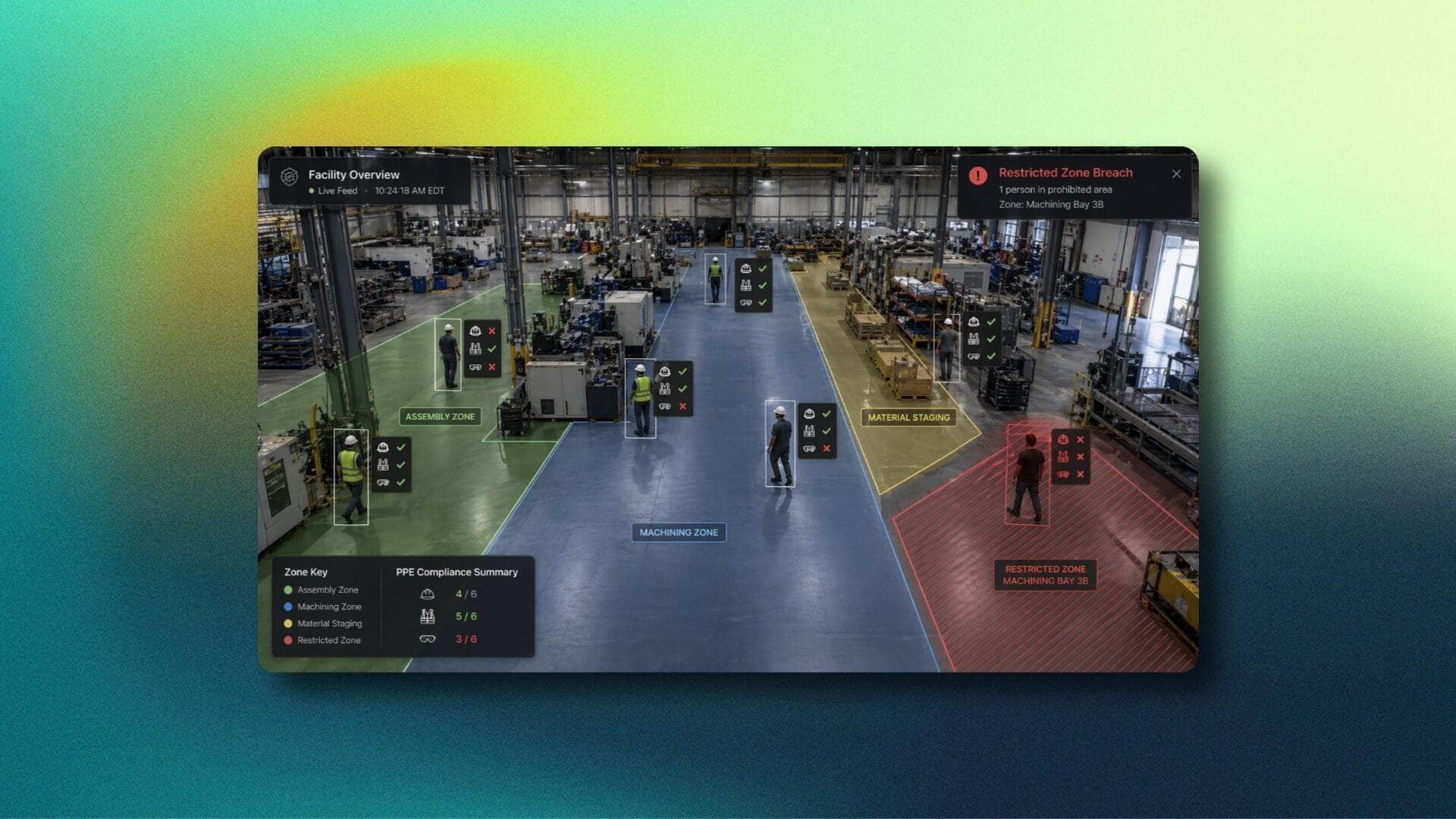
PPE compliance, zone intrusion, equipment presence, and headcount off the CCTV and site cameras you already run. No rip and replace.
Measurement from imagery
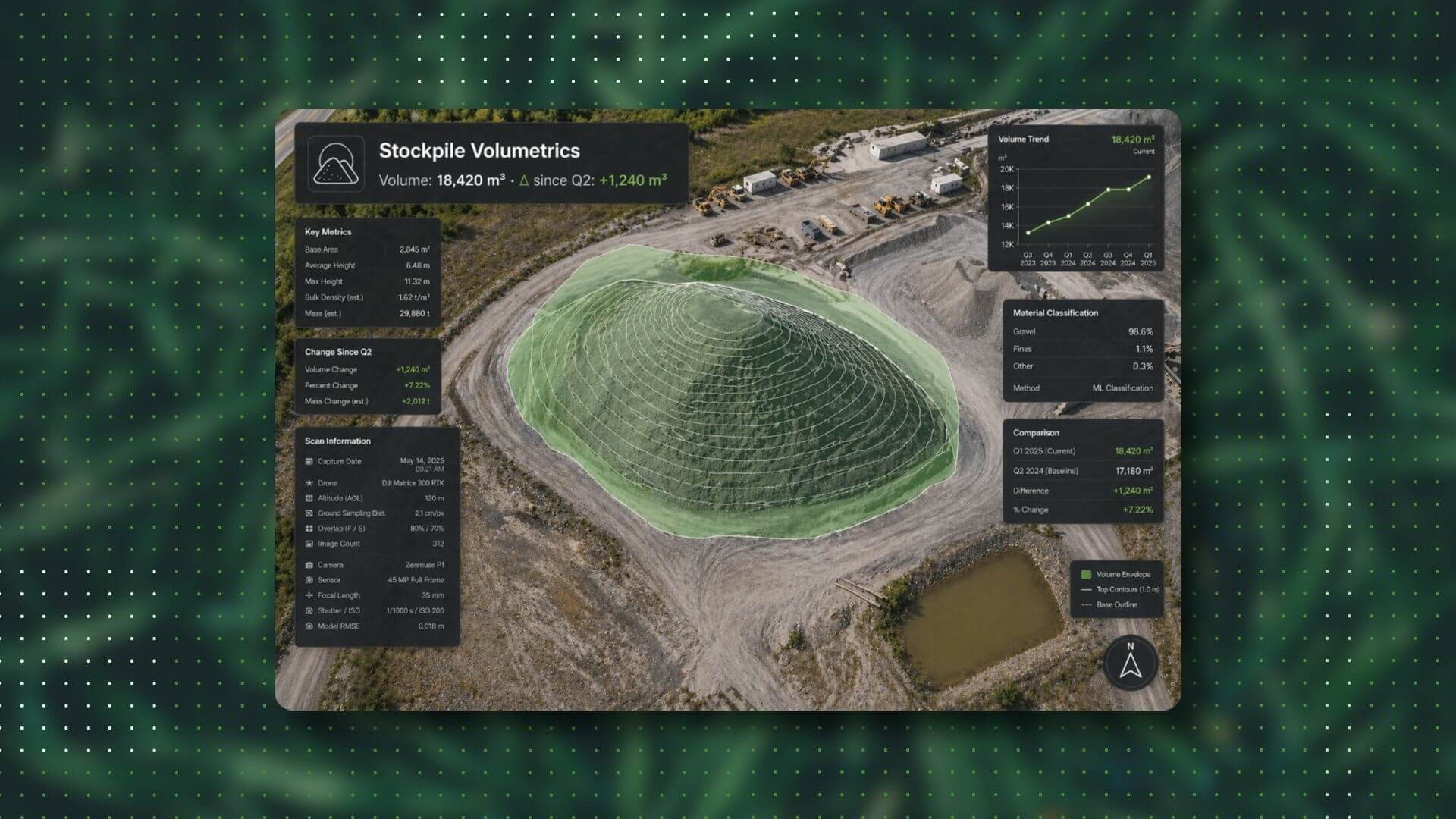
Stockpile volumes, asset counts, and site coverage from drone and aerial imagery, with the error range stated instead of hidden.
Change and damage detection
Compare a site to itself over time. What moved, what's missing, what got damaged, scored between two passes rather than eyeballed.
Model training and tuning
Custom detection classes trained on your imagery, with a mutation and versioning workflow so a retrain doesn't quietly break what was working.
Wiring detections into the graph
A detection becomes an object with a location, a timestamp, and an owner. From there it can trigger an action, an alert, or a queue item.
Review and correction
False positives are a fact of life. We give reviewers a fast way to confirm or reject, and that feedback improves the next run.
Narrow first. Checkpoint often. Nothing you can't walk away from.
Discovery
A short sprint with your operators. We map the use case, the objects, and the data you actually have, not the data the diagram says you have.
First build
We pick the thinnest slice a real person can use on a real day, and ship that. Production-ready on the first release, not a prototype we promise to harden later.
Every two weeks
A checkpoint and a decision. You see working software, you tell us what is wrong, we adjust. You are never locked into the next phase.
Handover
Documentation, runbooks, and your engineers in the repo while we build. If we disappear, the thing keeps running.
What you're handed
Trained detection or measurement models running against your feeds
Detections landing in the operational graph as objects, not log lines
A stated accuracy range and the conditions where it degrades
A review queue for confirming or rejecting detections
A retraining path your team can run without us
Same discipline, different floor.
- ManufacturingPPE and zone compliance on the floor, with violations opening a safety record automatically.
- EnergyAerial asset census and stockpile volumes across sites that are expensive to walk.
- Public SafetyDamage assessment across a footprint after an event, scored pass over pass.
- Real EstateSite progress and material counts tracked from drone passes instead of a supervisor's notes.
- DefenseChange detection and asset counts across a monitored area.
Shipped, running, and measured.
Mass Event Security Planning
Counter-UAS Simulation
3D simulation for counter-UAS response planning, enabling security teams to rehearse and refine strategies on Palantir.
50+
Zones Per Venue
<5 min
Scenario Launch
100K+
Event Capacity
150+
Response Paths
Applications this discipline shipped.
 01
01PPE & Zone Compliance
Continuous PPE and zone compliance off existing CCTV, with proprietary zone logic.
 02
02Stockpile Volumetrics
Bulk material volume and quarter-over-quarter change from drone imagery.
 03
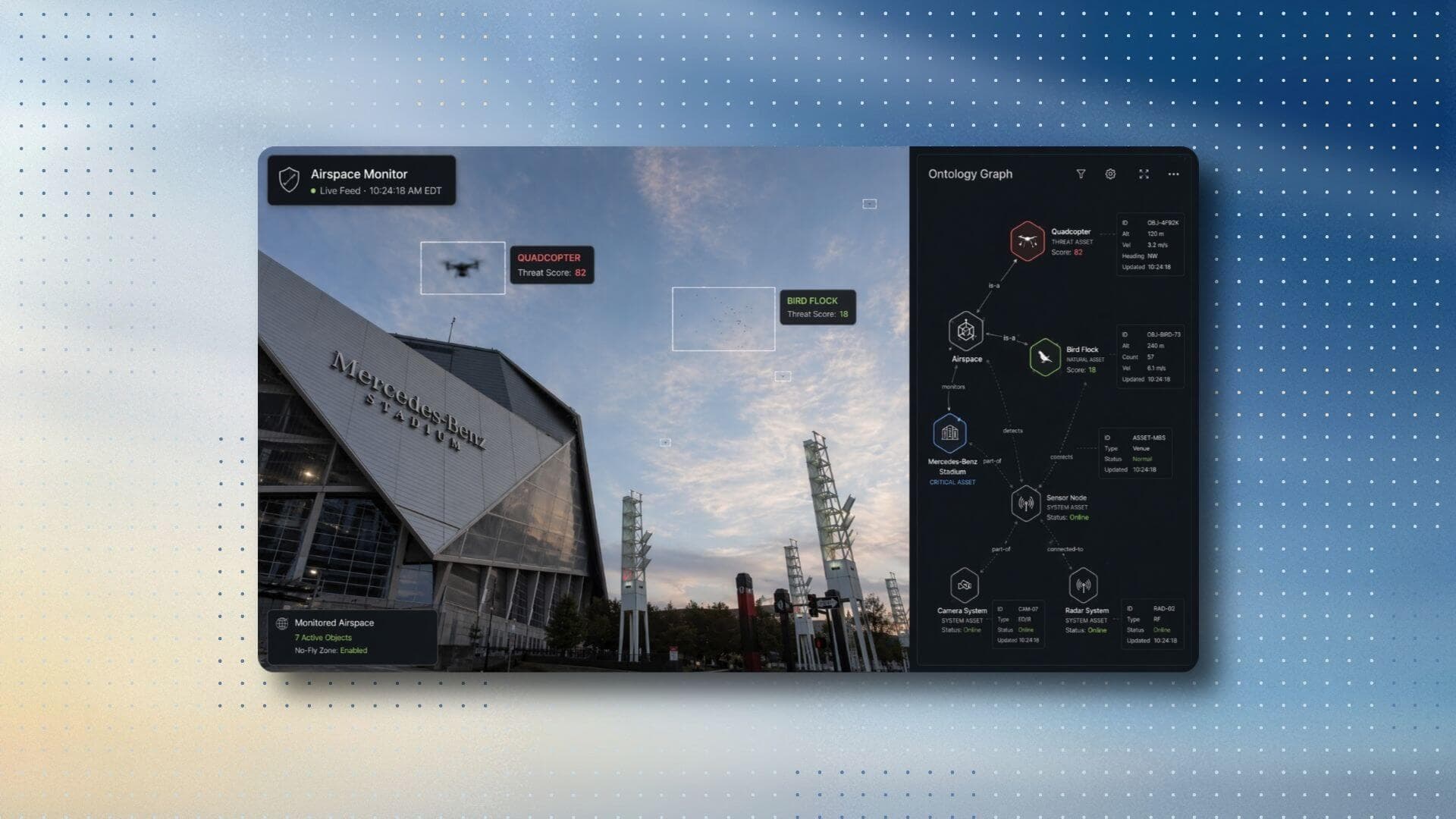
03Aerial Asset Census
Detection, re-identification, and threat scoring around stadiums and critical infrastructure.
Revelation, not reinvention.
We've built this before. These are deployable pieces we bring in on day one instead of billing you to write them again.
- Model
YOLO Modeling Objective
Complete setup for YOLO object detection model inference directly inside Foundry.
- Code Repository
YOLO Mutation Manager
Manages context-specific model variations without creating entirely new tools.
- Widget
Human Validation Station (HITL)
Lightweight human-in-the-loop review and correction interface with audit trail.
Tell us what's breaking. If we're not the right team for it, we'll say so and point you somewhere better.